
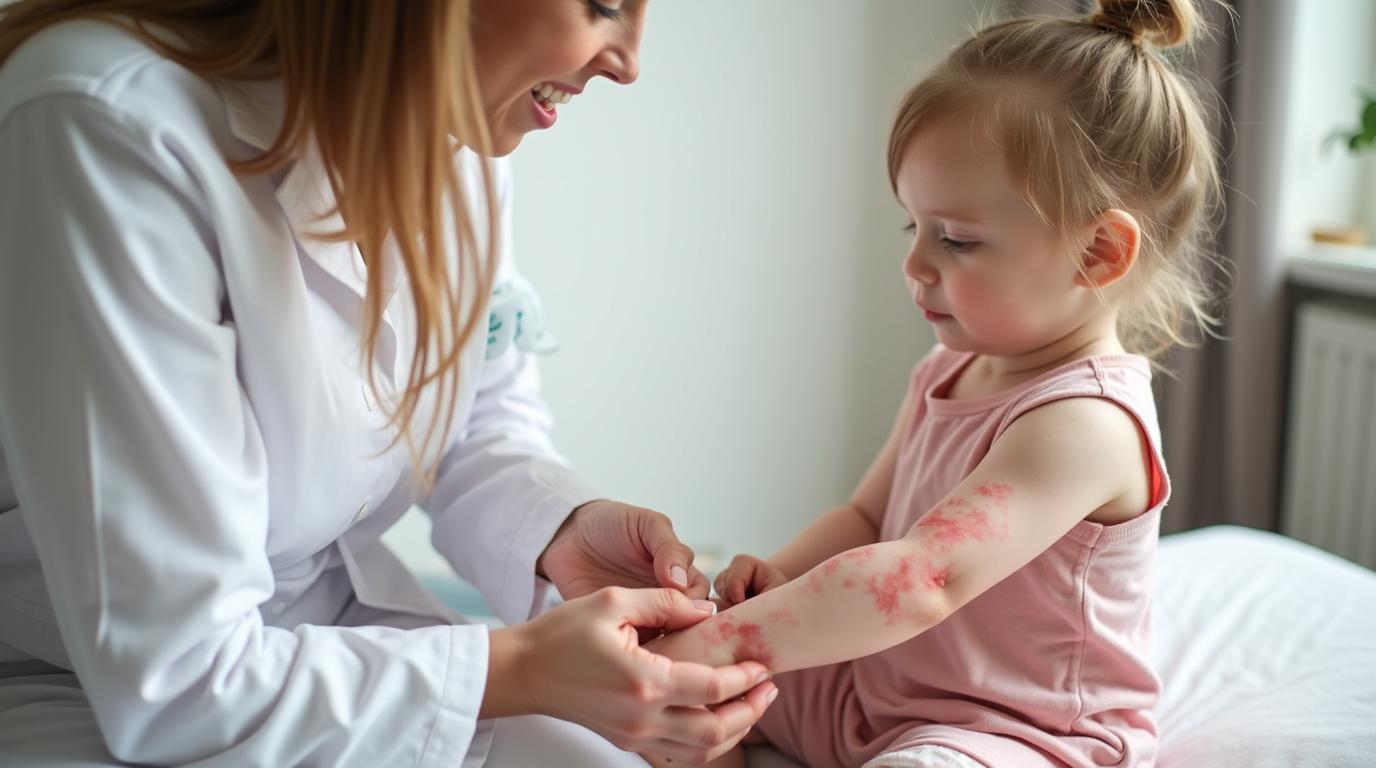
What is atopic dermatitis?
Atopic dermatitis, also called atopic eczema, is a chronic skin condition and one of the most common in childhood. It affects between 2% and 20% of children worldwide.
It has a genetic component and tends to run in families, often alongside a family history of asthma, allergies, or hay fever. Many children with atopic dermatitis also have a food allergy, but the allergy does not cause the eczema.
What does it look like?
- Dry, scaly skin.
- Red patches that are intensely itchy.
- Thicker skin in areas that are scratched often (lichenification).
- Sometimes, infections caused by constant scratching.
The itch can disrupt sleep and affect the quality of life of the child and the whole family. Flare-ups tend to come and go, with periods when the skin gets worse and others when it improves.
What can make it worse?
- Extreme weather: cold, heat, and humidity.
- Irritants: perfumes, detergents, fabrics such as wool, and contact with dry leaves.
- Infections: viral infections such as the flu, or bacterial infections.
- Sweat: heavy sweating irritates the skin.
- Emotional stress: it does not cause eczema, but it can make symptoms worse.
How is it treated?
Treatment aims to prevent flare-ups and relieve symptoms. It is tailored to your child's age and how severe the eczema is.
Moisturize every day. This is the most important step. Keep baths short, 5 to 10 minutes, with lukewarm water and a gentle soap. After bathing, apply a mild moisturizer such as petroleum jelly or a hypoallergenic cream.
Treat the patches. Low- or medium-strength corticosteroid creams are applied to affected areas twice a day until the patches clear. If they don't respond, calcineurin inhibitors such as tacrolimus or pimecrolimus may be used.
Ease the itch. Some oral antihistamines, such as hydroxyzine, loratadine, or cetirizine, can help control itching and improve sleep.
Avoid triggers. Learning what sets off your child's eczema, such as harsh detergents or extreme temperatures, helps reduce flare-ups.
Treatment for severe cases. For severe eczema, systemic treatments such as cyclosporine or methotrexate, or biologic treatments such as dupilumab, may be considered.
The family's role
Atopic dermatitis affects the whole household. Understanding that it is a long-term condition, knowing how to handle flare-ups, and staying consistent with treatment make a real difference. During the visit, we walk you through each step so you can care for your child's skin with confidence.
Can it be cured?
There is no definitive cure, but most children get better over time. With good management, children with atopic dermatitis can lead normal lives.
When to see a doctor
Book a visit if the itching keeps your child from sleeping, if flare-ups don't improve with moisturizing and home care, or if the skin looks infected, with crusts, pus, or pain.