
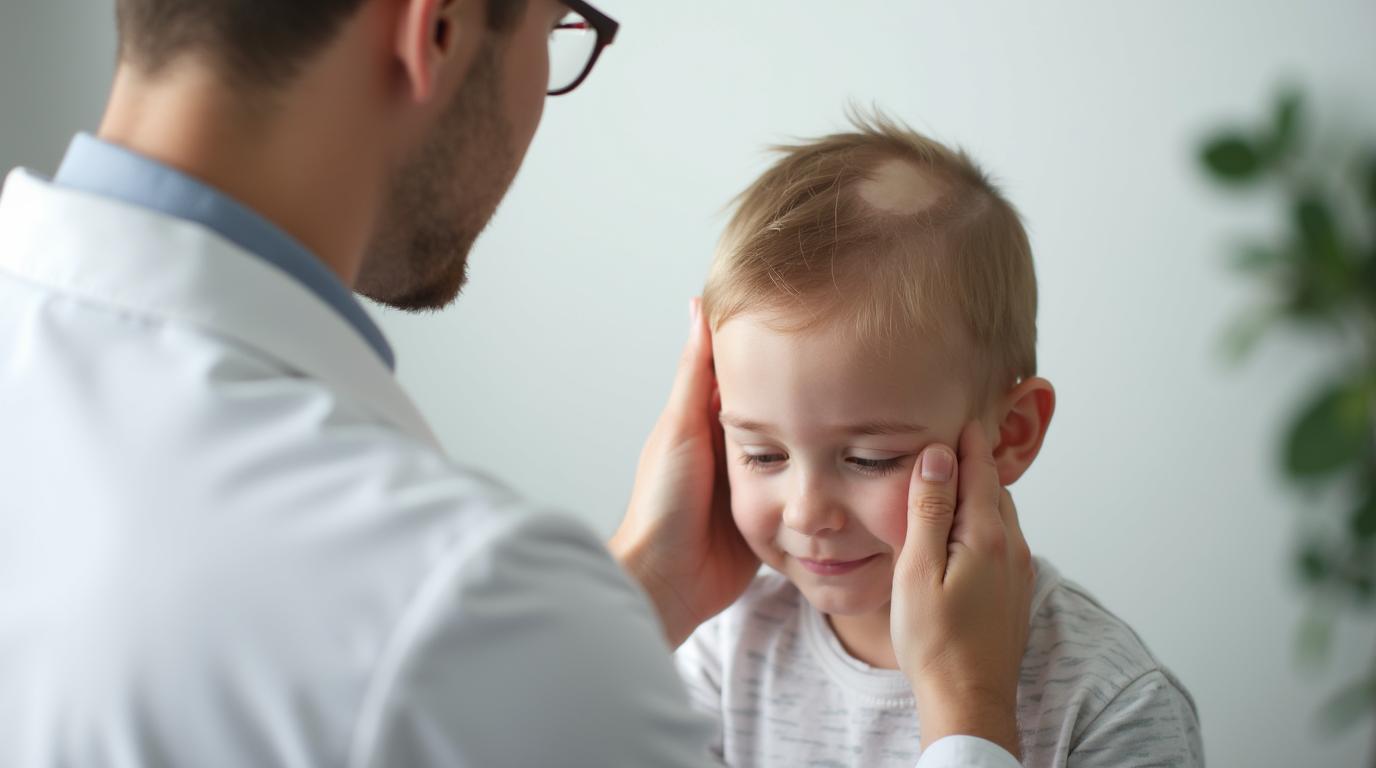
What is it?
Alopecia means hair loss. Alopecia areata is a common hair disorder that affects about 0.1–0.2% of people. It can start at any age, including in childhood.
In most cases it affects only the scalp, with one or more smooth, well-defined bald patches. Some more severe forms also affect body hair.
Why does it happen?
The exact cause is unknown. It is thought to be an autoimmune process, in which the immune system mistakenly attacks the hair follicles. The hair falls out, but the follicle is not permanently damaged, which is why hair can grow back.
Some factors are linked to alopecia areata:
- A family history of alopecia areata.
- Other autoimmune conditions, such as thyroid disease, vitiligo, or type 1 diabetes.
- Stressful events, physical or emotional, which can trigger or worsen episodes.
How is it diagnosed?
Diagnosis is based mainly on examining the scalp and hair. When it is unclear, a scalp biopsy can confirm it.
Because the immune system can also affect other organs, such as the thyroid, testing is recommended at the time of diagnosis, especially if there are other symptoms or a family history.
How is it treated?
Hair often grows back on its own, without treatment. Small patches usually have a good outlook and regrow quickly. When treatment is recommended, it depends on how much hair has been lost and on the child's age:
- Topical corticosteroids: the most common treatment in children and among the most effective. They are applied once or twice a day to the affected areas until hair regrows. They encourage regrowth but don't prevent hair loss in other areas.
- Topical immunotherapy: for more extensive cases. It involves applying substances that cause a controlled allergic reaction to stimulate hair growth.
- Minoxidil: an over-the-counter medication that may help in some cases.
- Oral corticosteroids or injections into the affected area: for severe cases, although long-term use can have significant side effects.
What to expect
The course varies a lot. In many cases hair grows back on its own. Some children have several episodes over time, and in some the hair loss progresses to more extensive forms, such as alopecia totalis (the whole scalp) or alopecia universalis (the whole body).
How to support your child
Alopecia areata can have a real emotional impact, especially on children and teens.
- Explain the condition honestly, in a way that fits their age, and let them know you're on their side.
- Listen and offer guidance. Being available to listen is part of the therapy.
- If they are bothered by how they look, a new hairstyle can help.
- If they are teased at school, talk with their teacher and explain the condition so others understand.
- Encourage activities that make them feel good; self-esteem matters a lot.
- If you know other children with alopecia areata, spending time together helps them see they are not alone. Support groups and educational resources can also help.