
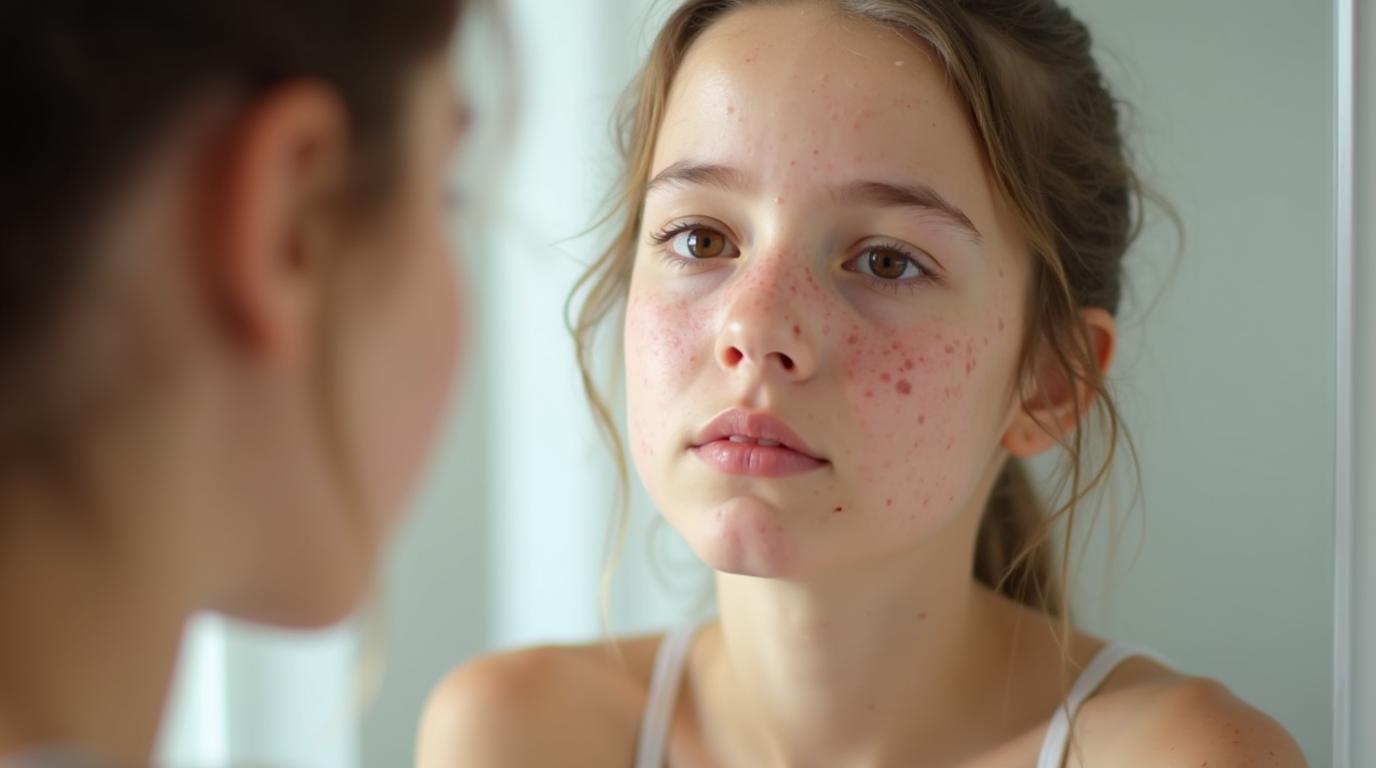
What is acne?
Acne is a chronic inflammatory skin condition. It shows up as comedones (blackheads and whiteheads), small red bumps (papules), pus-filled pimples (pustules) and, in more severe cases, nodules and cysts.
It is typical of adolescence and young adulthood, but it can continue or appear in adulthood. Beyond the skin, it can affect quality of life and self-esteem.
Why does it happen?
There is no single cause, but a combination of factors:
- Hormones: during puberty, androgen hormones rise and stimulate the skin's oil glands to produce more oil (sebum).
- Bacteria: a skin bacterium, Cutibacterium acnes (formerly Propionibacterium acnes), contributes to inflammation.
- Genetics: if parents or other close relatives had severe acne, your child is more likely to have it too.
- Other factors: stress, some medications, and pore-clogging cosmetics can make it worse.
Common myths
- "Acne comes from poor hygiene." Cleansing matters, but acne is not caused by dirt. Over-washing can irritate the skin and make acne worse.
- "Chocolate and greasy food cause acne." There is no strong scientific evidence that these foods directly cause acne. However, a diet high in sugar and refined carbohydrates may influence hormones and contribute to breakouts in some people.
- "Home remedies like aloe vera cure it." Some natural remedies can soothe the skin, but moderate or severe acne usually needs medical treatment.
Everyday care
- Don't pick or pop pimples. Squeezing them increases inflammation and the risk of scarring.
- Wash the face twice a day with a gentle cleanser for acne-prone skin, without scrubbing hard.
- Choose "non-comedogenic" or "oil-free" products, including makeup and sunscreen.
- Protect the skin from the sun with a sunscreen suited to acne-prone skin. Unprotected sun exposure can worsen breakouts and leave dark marks (hyperpigmentation).
- Shave carefully, with sharp blades and a gel for sensitive skin, to avoid irritation.
How is it treated?
Treatment depends on how severe the acne is and on each teen's individual needs.
- Creams or gels, for mild to moderate acne:
- Benzoyl peroxide, which reduces bacteria and inflammation.
- Retinoids, such as adapalene or tretinoin, which unclog pores and reduce comedones.
- Topical antibiotics, such as clindamycin, which reduce bacteria on the skin's surface.
- Oral antibiotics, such as doxycycline or minocycline, for moderate to severe acne.
- Oral isotretinoin: one of the most effective treatments for severe or stubborn acne. It is used under strict medical supervision because of its possible side effects.
- Hormonal treatments: for girls and women, birth control pills or anti-androgens can help when acne is hormone-related.
Treatments take 6 to 8 weeks to show visible improvement. Sticking with them and following up with your dermatologist are essential to finding what works for each teen.
When to see a doctor
Book a visit if acne is persistent or severe, if it affects your child's self-esteem, or if scars or dark marks start to appear. Acting early helps reduce long-term marks.