
What are they?
Head lice are parasites that live in human hair, and they are one of the most common infestations in children. They go through several stages, from egg (nit) to adult louse, which is about 2 millimeters long. They feed on tiny amounts of blood and tend to be more active at night.
How do they spread?
Mainly through close head-to-head contact. Less often, by sharing combs, hats, pillows, or other personal items.
Symptoms
- Intense itching of the scalp, especially behind the ears and at the nape of the neck.
- Irritation and redness from scratching.
- Small sores or crusts.
How to confirm it's lice
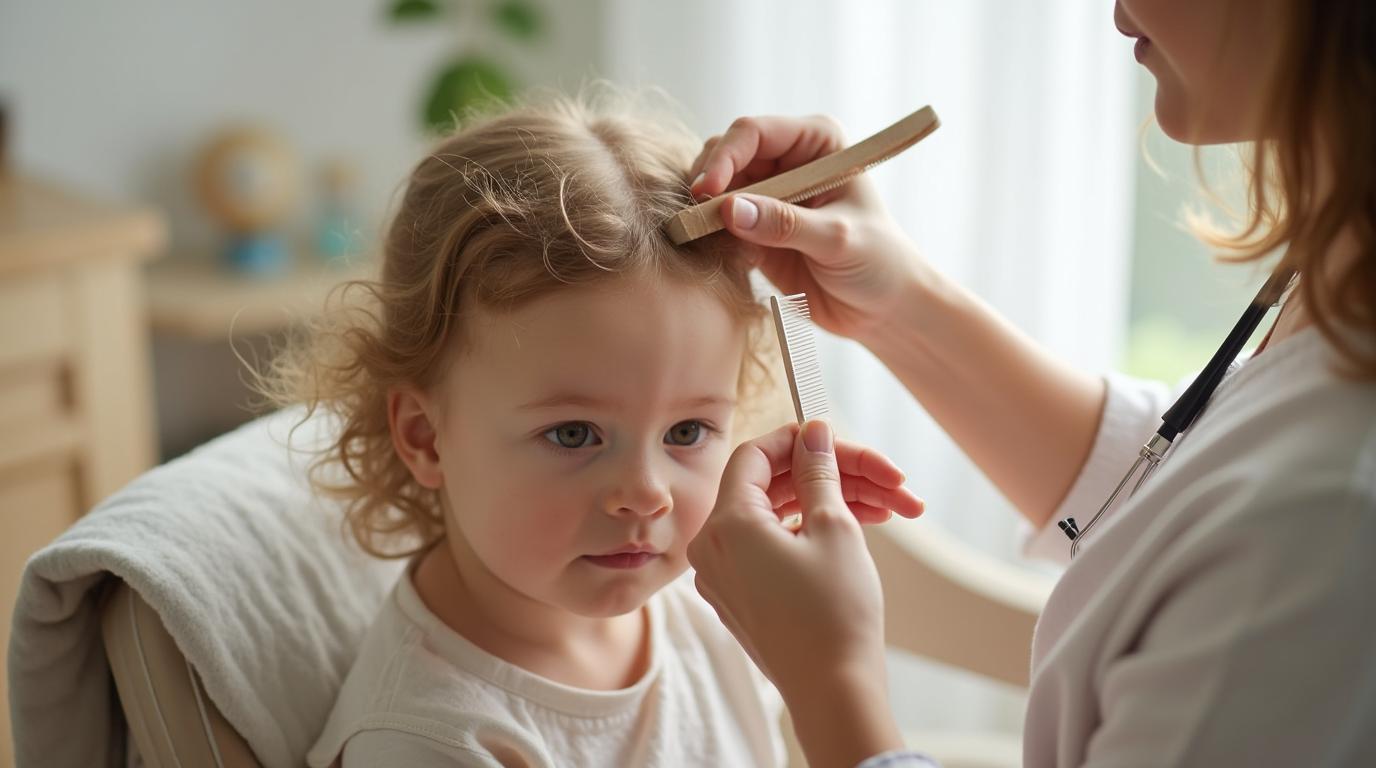
Check the scalp in good light. Finding live lice, or nits firmly attached to the hair, confirms an infestation. A fine-toothed lice comb and a magnifying glass make it easier.
Treatment
Start treatment as soon as you confirm lice. It is important to treat the whole family and anyone who has been in direct contact with your child, even if they have no symptoms. The most common treatments are:
- Ivermectin: available as tablets or lotion. It is effective for children who weigh 15 kg (33 lb) or more. It is given in two doses, one week apart. Ask your pediatrician for the correct dose.
- Dimethicone lotions: lotions and shampoos that kill live lice. Afterward, use a fine-toothed comb to remove the nits.
- Permethrin: approved for children older than 2 years. It kills live lice but not nits, so treatment is repeated after 8 days.
- Lice and nit removal services: offered by specialized companies that use electric combs and suction techniques.
There are home remedies, such as vinegar, mayonnaise, or essential oils, but there isn't enough scientific evidence that they work.
Prevention
- Avoid head-to-head contact during games and group activities.
- Don't share combs, hats, hair accessories, pillows, or headphones.
- Check your children's hair regularly, especially when there are cases at school or daycare.
To choose the best treatment for your child, talk to your pediatrician or a pediatric dermatologist.